
Storm Check
Madeira Storm Check: What to Inspect After Strong Wind or Heavy Rain
What to inspect after significant wind or rain when you are away from the island.
This article was created with AI assistance and editorially reviewed by Florian Engelmann, CEO.
 AI-generated image
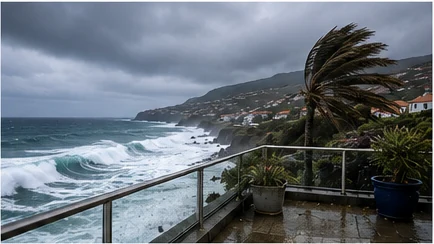
Madeira’s weather is not identical across the island. The Madeira Islands Tourism Board describes distinct microclimates, with the south generally warmer and drier and the north and mountainous areas more exposed to wind and rainfall.
Strong wind or heavy rain does not automatically mean that a property has been damaged. If the home is empty, however, visible changes may remain unnoticed until someone visits. A Storm Check is therefore about establishing what can actually be seen after the event.
1. Start outside before entering
Look for fallen branches, displaced outdoor furniture, damaged awnings or shutters, loose objects, visible damage to gates or fences, water accumulation and debris around entrances.
Madeira Civil Protection advises securing loose objects on balconies and window ledges during strong wind and warns that awnings, roofs, temporary structures and trees can be affected by stronger gusts.
2. Check doors, windows and shutters
Check whether windows appear closed, exterior doors are intact, shutters remain correctly positioned, frames show visible damage or water has entered around openings. This is a visual assessment, not a technical window inspection.
3. Look for water ingress inside
Check ceilings, walls near windows, floors below exterior openings, bathrooms, utility areas and places where leaks have occurred before. Fresh staining, damp surfaces, dripping water or standing water should be documented.
4. Check visible drainage areas
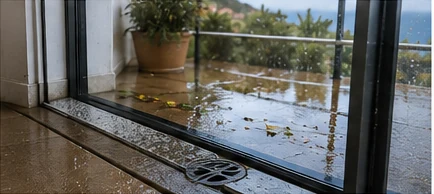
Where safely accessible from ground level, look at terrace drains, balcony drains, entrance channels and other visible drainage points. Madeira Civil Protection specifically recommends keeping rainwater drainage systems unobstructed during heavy rain.
 AI-generated image
5. Inspect terraces, balconies and outdoor furniture
Check whether furniture, cushions, pots or decorative items have moved or fallen, whether glass appears damaged and whether water is pooling where it was not before.
6. Look at trees and garden areas from a safe position
Look for fallen branches, visibly damaged trees, debris near the building and damaged fences. A large unstable tree requires specialist assessment rather than routine handling.
7. Check exposed exterior structures
Awnings, pergolas, lightweight roof elements, shades, fences, gates and mounted equipment may show visible changes. Do not turn a visual check into a structural diagnosis.
8. Check electricity only at a basic visual level
A routine visit may establish whether power appears available or whether an appliance shows an obvious warning. Do not open electrical panels or attempt electrical repairs. Water near electrical installations or a burning smell requires specialist attention.
9. Decide whether anything needs immediate attention
An open or damaged window, active water ingress, unsecured shutter, damaged gate or debris blocking normal access may require action before the property is left again. Report the observation and agree the next step.
10. Document the condition clearly
Record the date, areas checked, visible condition, photographs and any change that may require specialist attention. Separate observation from diagnosis: “water staining below the window” is an observation; “the seal has failed” is a technical conclusion that needs proper assessment.
What this check or cleaning does not replace
- a structural inspection
- a roof inspection at height
- an electrical inspection
- plumbing diagnosis
- a professional drainage survey
- a tree-safety assessment
- an emergency rescue service
- building repair work
If diagnosis, testing or repair is required, the appropriate qualified specialist should take over.
Frequently Asked Questions
Does strong wind or heavy rain mean my Madeira property has been damaged?
No. Weather alone does not establish damage. A Storm Check is used to determine whether visible changes can be found at the specific property.
Why can weather conditions differ so much across Madeira?
Madeira’s mountainous terrain creates distinct microclimates. The official tourism authority notes that the north and mountainous areas are generally more exposed to wind and rainfall than the south.
What does Madeira Civil Protection recommend during strong wind?
Its guidance includes closing doors and windows, removing loose objects from balconies and window ledges and paying attention to exposed structures and possible falling trees.
What does Civil Protection recommend during heavy rain?
Its guidance includes following official warnings and keeping rainwater drainage systems clear of material that may obstruct the flow of water.
Is a Storm Check the same as Property Care?
No. Property Care is ongoing and agreed in advance. A Storm Check is event-driven and focuses on the visible condition after significant weather.
Sources
- Madeira Islands Tourism Board – Weather in Madeira
- IPMA – Weather warnings for Madeira
- Serviço Regional de Proteção Civil da Madeira – Recomendações Chuva e Vento
- Serviço Regional de Proteção Civil da Madeira – Recomendações para Vento Forte
Sources checked: 14 August 2026
