
Background image: AI-generated
Owner Guides
Humidity in an Empty Madeira Property: What Owners Should Check
How owners can document signs of moisture during a long absence and know when a professional assessment is required.
Direct answer
Moisture should not be judged from one outdoor humidity value. Repeated or persistent signs such as water staining, damp surfaces, musty odour or visible microbial growth should be documented and the cause professionally assessed when necessary.
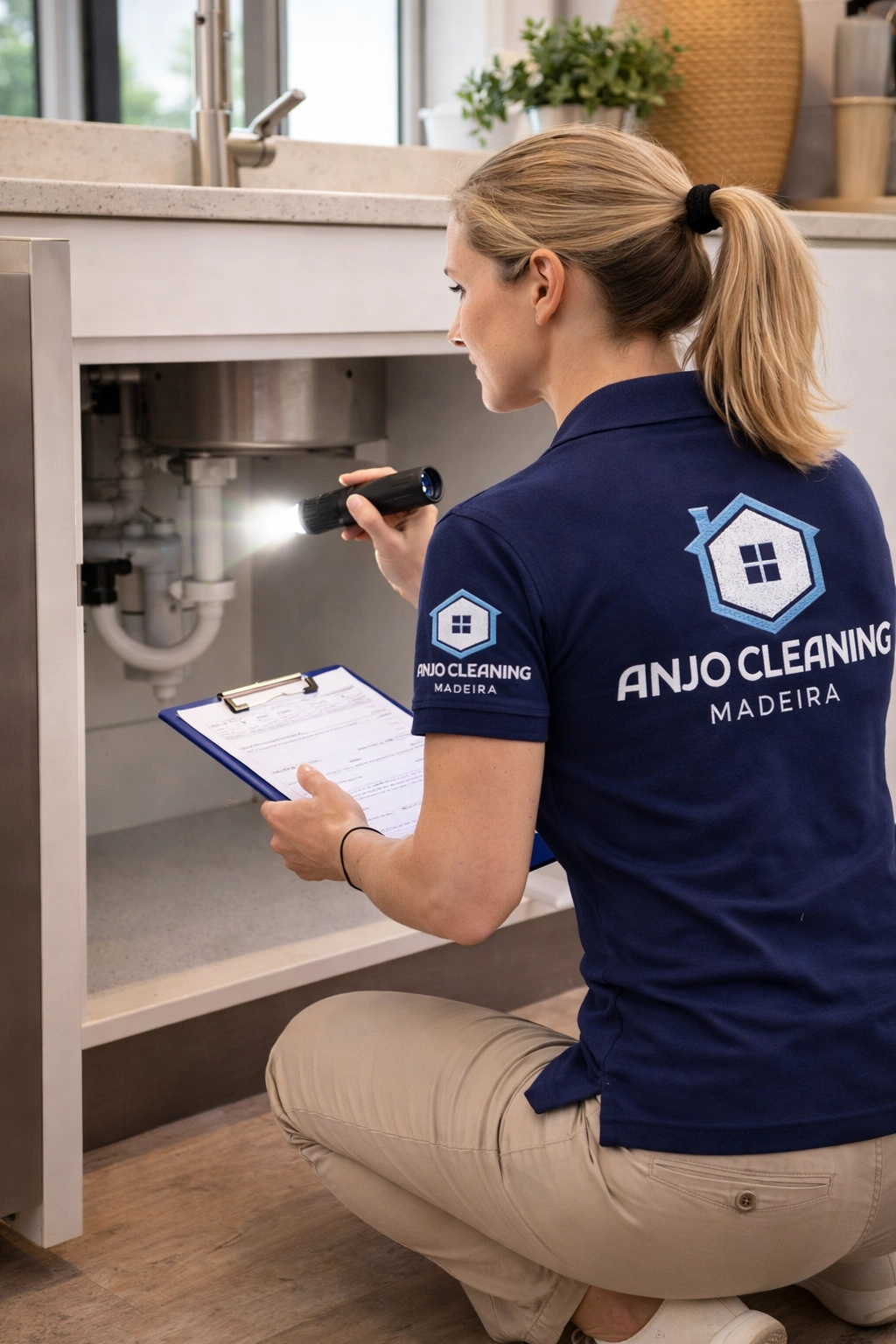 AI-generated image
Evidence base
- IPMA publishes daily relative-humidity values by municipality using interpolated data from automatic weather stations. These describe outdoor conditions and do not replace measurements or diagnosis inside a building.
- WHO states that preventing or minimizing persistent dampness and microbial growth in buildings is the most important way to avoid adverse dampness- and mould-related health effects.
- A visual inspection can document signs of moisture but cannot reliably identify the cause, such as a leak, condensation or a building defect. Persistent or significant findings require appropriate professional assessment.
What to look for in an unoccupied property
- Document new water stains on ceilings, walls and around window openings.
- Record a musty or unusually damp odour as an observation without assuming the cause.
- Document visible condensation, damp surfaces or microbial growth.
- Compare locations with known previous moisture issues.
Keep outdoor weather and indoor diagnosis separate
- IPMA data can provide the outdoor weather context.
- A high or low outdoor value does not directly describe the humidity of a specific indoor room.
- Reliable indoor assessment requires suitable measurements and, when needed, technical investigation of the moisture source.
When professional help is needed
- Arrange professional investigation for visible water ingress, recurring damp patches or extensive microbial growth.
- Do not improvise diagnosis or repair where electrical, structural or waterproofing damage may be involved.
Quick checklist
- Checked rooms for new water staining
- Checked visible window/door junctions
- Recorded musty or unusually damp odour
- Documented visible condensation/damp surfaces
- Documented visible microbial growth
- Compared previous problem areas
- Created dated photos
- Used outdoor weather only as context, not indoor diagnosis
- Arranged professional assessment for persistent/significant findings
Sources and professional basis
Note: This checklist does not replace a technical inspection, legal advice or instructions from public authorities.
- IPMA - Daily relative humidity values by municipality
- WHO - Guidelines for indoor air quality: dampness and mould
Research checked: 9 August 2026
Support on the ground
If you cannot carry out the visual inspection or preparation yourself, the linked Anjo service page explains the relevant local support.
